Cryogenic storage systems
Built a foundation in refrigerated liquefied gas tank systems, including where different tank configurations are used, how component materials are selected, and how engineering codes shape design decisions.
Mechanical Static Intern
A five-week internship focused on static equipment engineering, cryogenic storage systems, nozzle analysis, boiler fundamentals, and LLM-assisted technical bid evaluation.
What I Worked On
Built a foundation in refrigerated liquefied gas tank systems, including where different tank configurations are used, how component materials are selected, and how engineering codes shape design decisions.
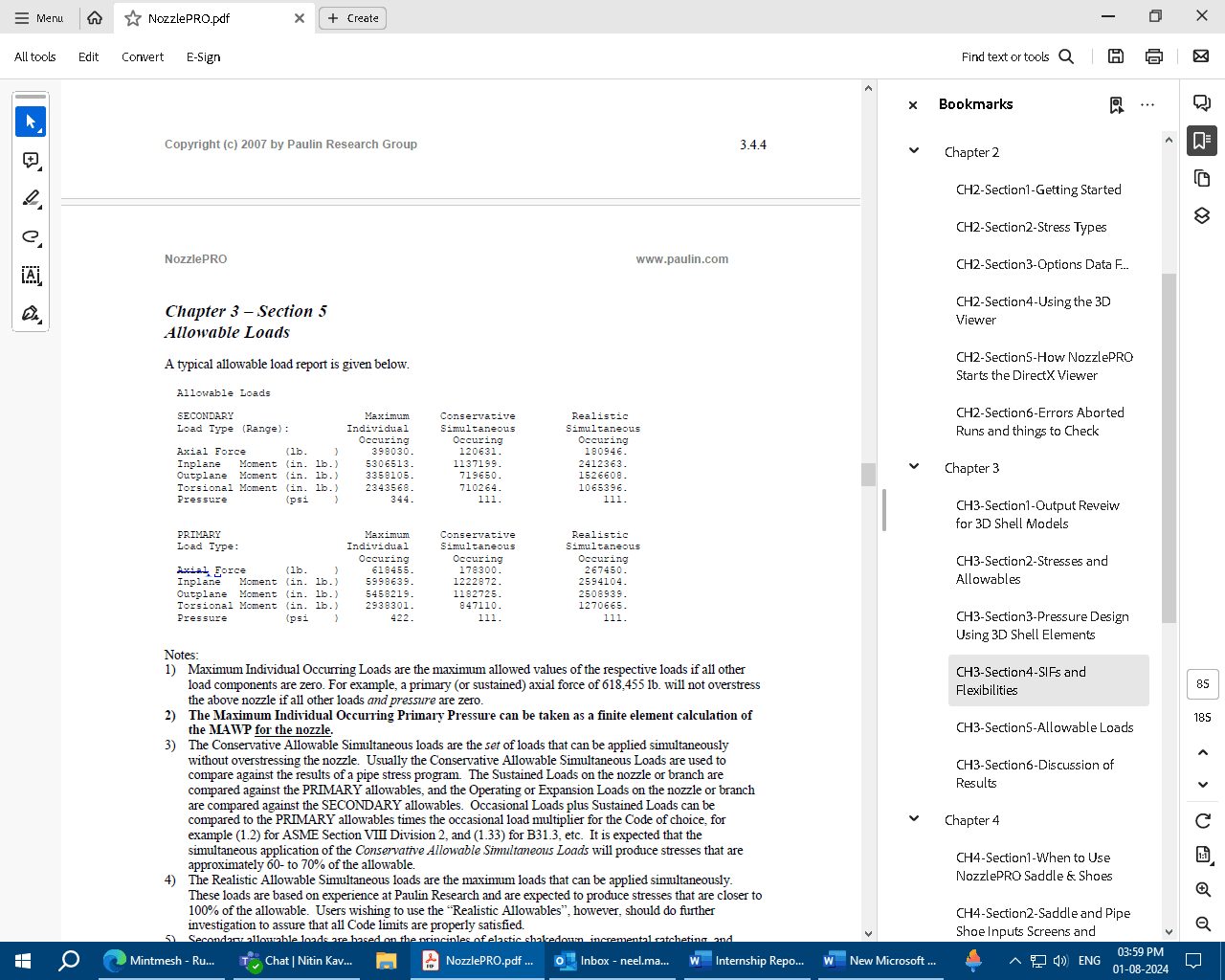
Compared finite element analysis outputs across NozzlePRO versions, focusing on stress intensification factors and flexibility factors after a code and formula update produced unexpected results.
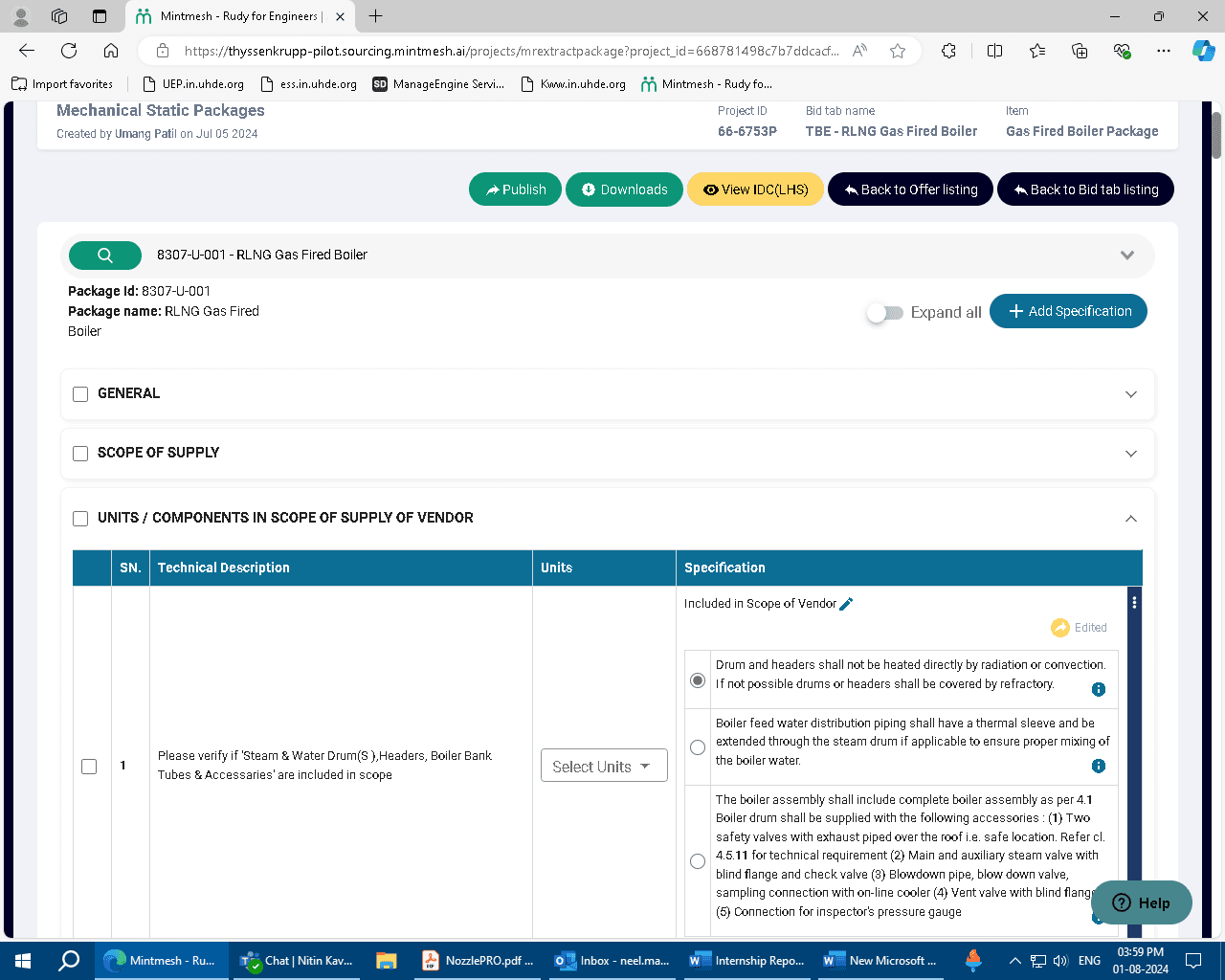
Supported RUDY, an LLM-assisted review workflow for technical bid evaluation, by studying boiler systems, reading vendor-facing documents, and validating generated specifications.
How I Approached the Work
The internship began with background research and moved into applied engineering review. Each assignment required enough domain knowledge to tell whether a software result, specification, or vendor response made mechanical sense.
Reviewed refrigerated tank types, tank component materials, and applicable standards before moving into software-driven analysis.
Manually checked NozzlePRO flexibility-factor calculations to understand why two software versions did not align with expected formula changes.
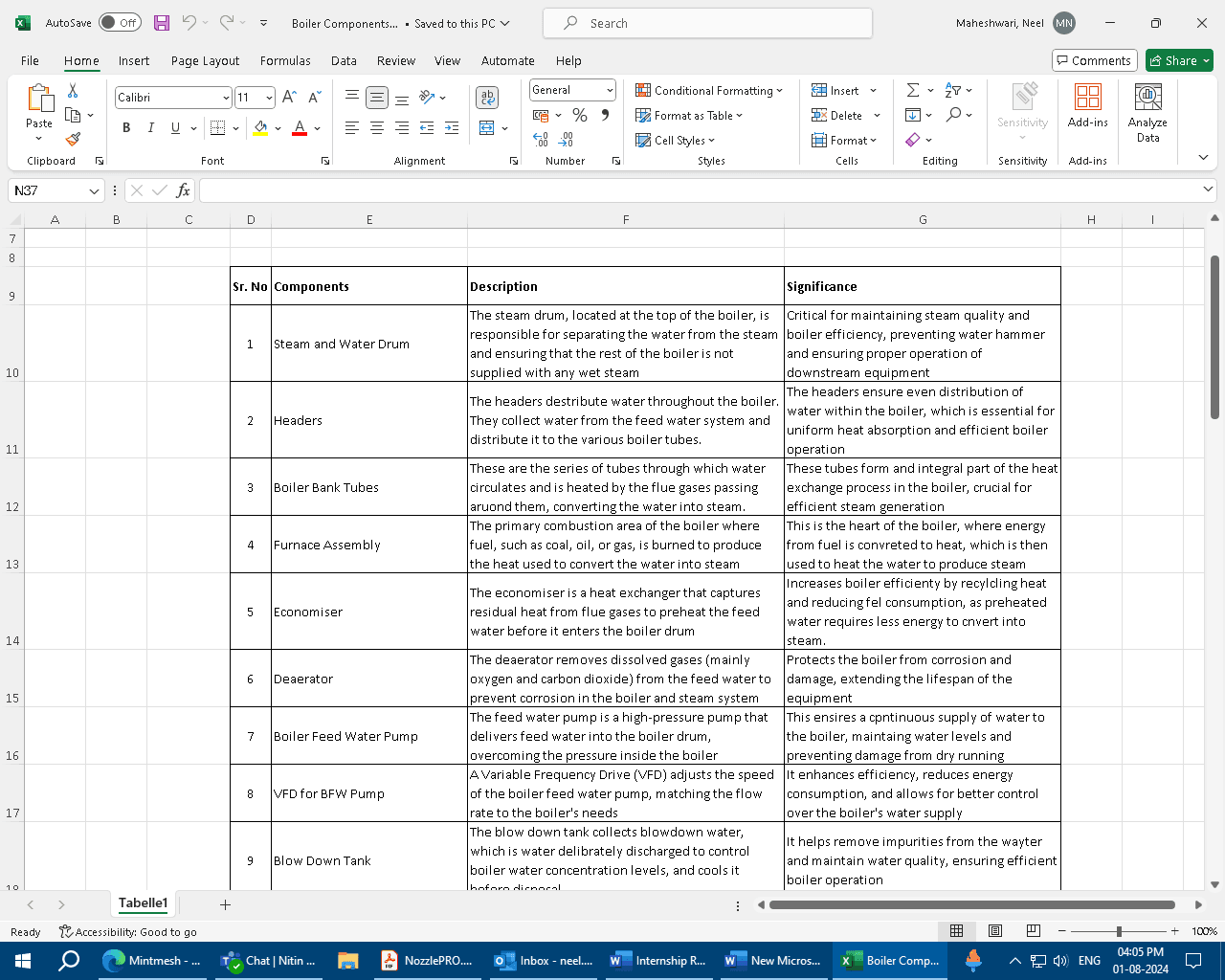
Studied D-type boiler components, process flow, technical offers, and boiler-efficiency equations to build enough context for document review.
Read technical specifications, material requisitions, annexures, process data sheets, vendor offers, and technical query documents before validating RUDY outputs.
Refrigerated liquefied gas storage systems were studied from the ground up: tank categories, use cases, material choices, component function, and the standards used to evaluate design acceptability.
The software task centered on why updated formulas did not produce the expected output shift. In-plane, out-plane, and torsional flexibility factors remained unchanged, while axial flexibility differed sharply, prompting a manual formula-by-formula check.
To review boiler specifications with more confidence, I studied boiler types, D-type boiler components, process schematics, direct and indirect efficiency equations, and the role each component plays in the operating cycle.
RUDY helped convert large technical document packages into structured TBE-TR parameters. I reviewed the generated entries against source specifications, marked vendor-specific cases for adjustment, and helped make the process faster for boiler specification review.
Work Samples
These images document the references, component study, and review interface used during the internship.
Working with RUDY
Mapped where key information lived across specification packages so generated responses could be checked against the source documents quickly.
Compared RUDY-generated parameter entries against the TBE-TR template and refined cases where vendor-specific information needed clearer handling.
Uploaded vendor offer packages from Thermax and ISGEC as part of the next review stage, while identifying where senior engineering guidance was needed.