14.06:1
High torque
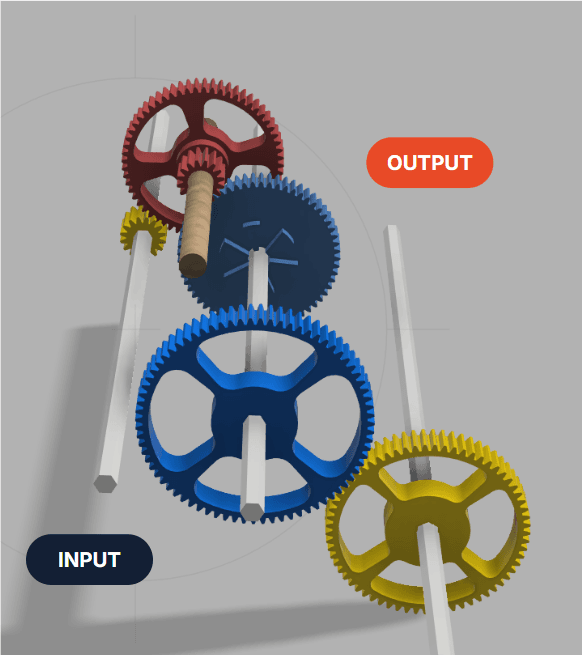
A two-stage compound 16-tooth to 60-tooth gear train prioritized pulling force for the strength event.
ME 371 / Mechanical Design II
A competition vehicle built around a servo-shifted constant-mesh transmission, balancing pulling strength, speed, agility, durability, efficiency, and a strict cost target.

Transmission Architecture
A rack-and-pinion and cam-follower mechanism uses a servo to engage two dog clutches. One clutch selects the compound high-torque path, the other selects reverse, and disengaging both leaves the high-speed path active.
14.06:1
A two-stage compound 16-tooth to 60-tooth gear train prioritized pulling force for the strength event.
0.5:1
A 60-tooth to 30-tooth arrangement increased wheel speed and helped the vehicle exceed the target velocity.
0.79:1
A 48-tooth to 38-tooth path provided controlled reverse motion for the agility course.
Gear-Train Iteration
The original 12-tooth to 72-tooth strength stage produced a ratio of 6:1 but required a large gear and another stage simply to route power to the axle. Replacing it with two compact 16-tooth to 60-tooth stages raised the ratio to 14.06:1 and improved the lifting result from 1 kg to 4 kg.
The tradeoff was additional gear contact, alignment sensitivity, and friction, all of which became important during physical testing.
Gear Analysis
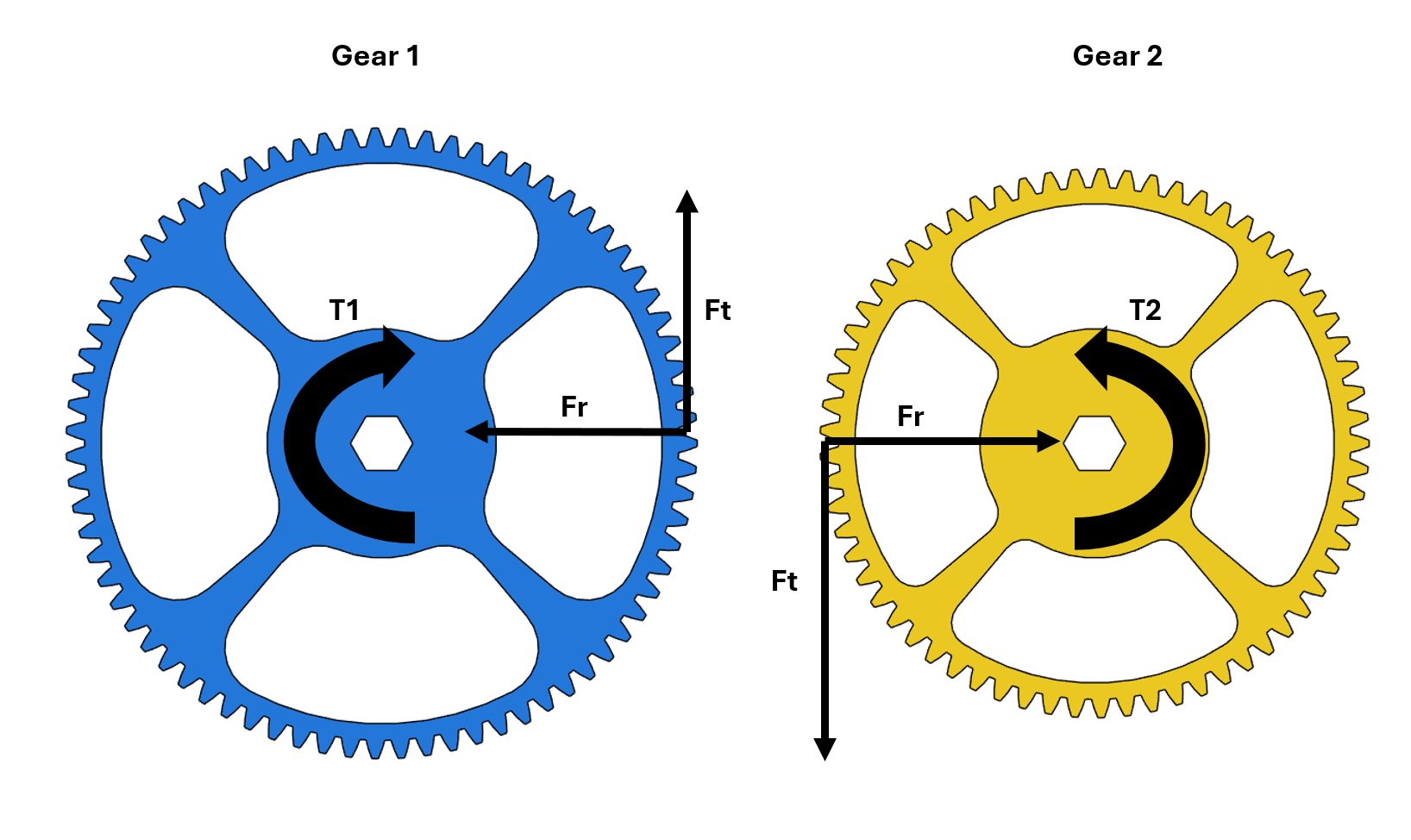
The final driven spur gear in the high-torque path was evaluated under a conservative stall-torque condition. The Lewis bending equation was used with the load carried by one tooth at the pitch radius. The analysis indicated that the PLA gear was adequate, with a reported factor of safety above 3.7.
Impact Protection
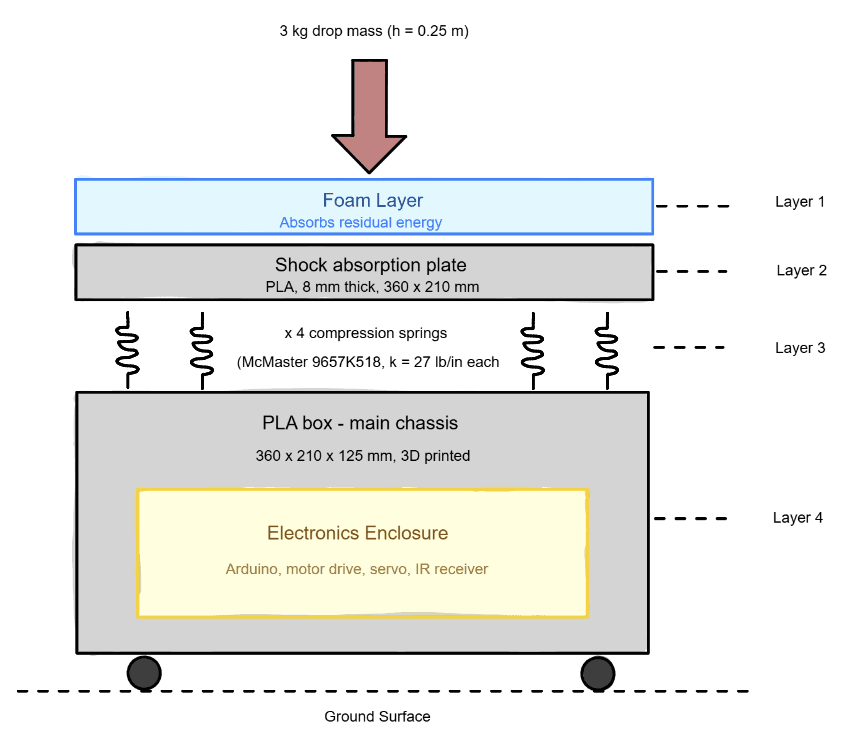
The durability concept placed foam above a suspended roof plate, supported by four corner springs over the protected chassis. Energy would be absorbed progressively through foam compression and spring deflection instead of transferring directly into the transmission and control hardware.
Structural Validation
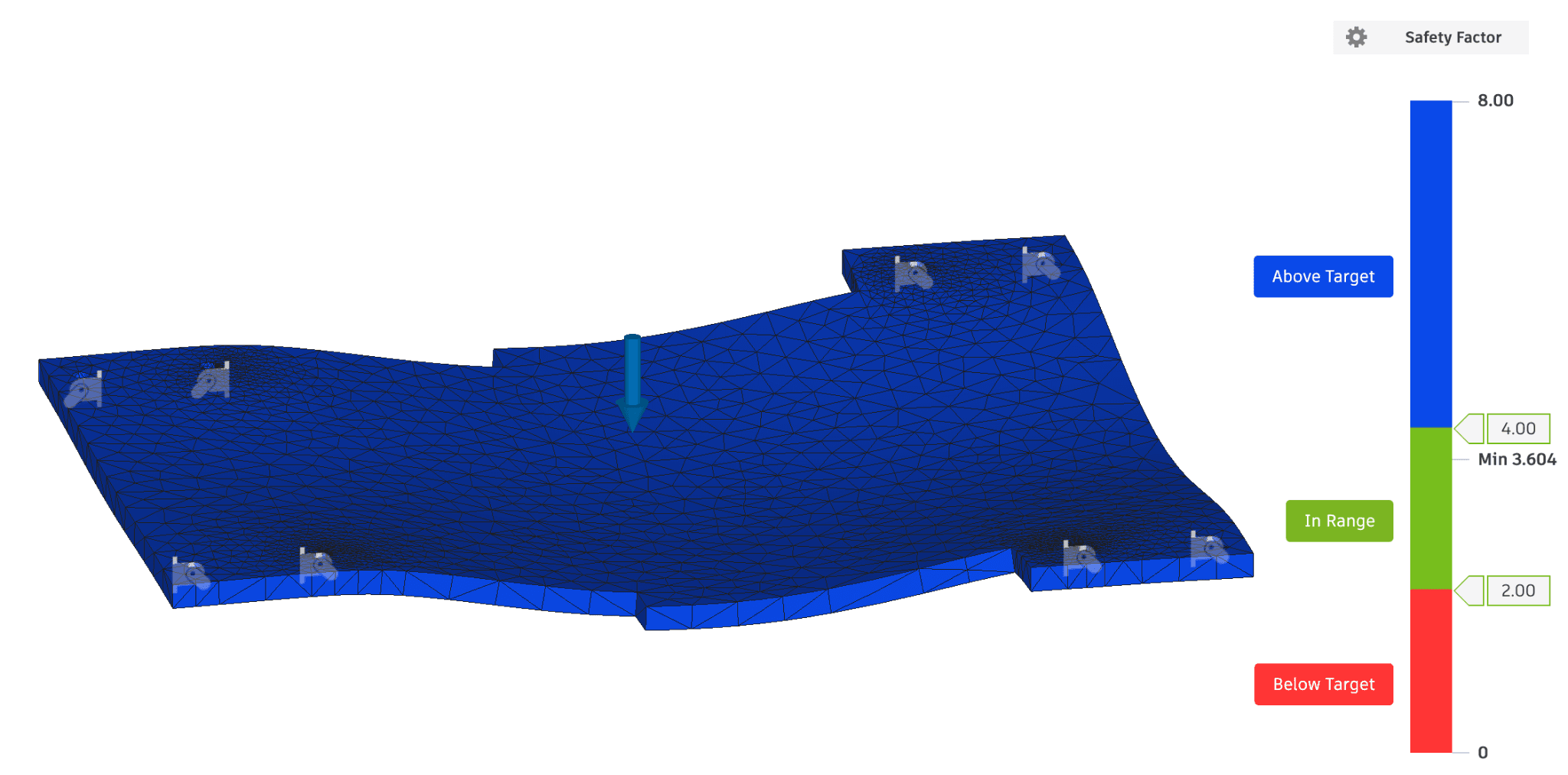
A 120 N equivalent static load was applied to the roof model after translating the impact through an impact factor. Fusion 360 predicted a minimum safety factor of 3.604 and a maximum displacement of 0.377 mm, consistent with the vehicle surviving the physical drop test.
Heptathlon Requirements
The assigned customer prioritized strength most heavily, while agility, efficiency, durability, and cost carried moderate importance. Speed and payload quality remained requirements, but had lower priority when design tradeoffs were necessary.
Lift 5 kg on an incline
HighReach at least 0.75 m/s
LowComplete at least 5 obstacle traversals
ModerateAchieve at least 60% efficiency
ModerateSurvive 3 kg from 0.25 m and 2 kg from 0.375 m
ModerateKeep the total build at or below $25
ModerateProvide a 10 cm x 10 cm x 10 cm payload compartment
LowCompetition Results
Strength
1 kg to 4 kg
Speed
0.8 m/s to 1.0 m/s
Agility
0 to 5 traversals
Efficiency
Passed 60% target
Durability
Passed drop test
Cost
$23.92
The final vehicle met the speed, agility, efficiency, durability, cost, and payload goals. It lifted 4 kg against a 5 kg stretch target, leaving strength as the clearest opportunity for another design cycle.