185 cm
First release
The first payload dropped close to the two-meter target.
ME 370 / Mechanical Design I
A single-motor walking robot that coordinates four Klann-linkage legs with a twin-auger dispenser to deliver protein bars at fixed intervals along a ten-meter path.

Design Brief
ProteinPal was designed as an autonomous delivery concept for gym-goers. The challenge was to synchronize locomotion and payload release without separate motors or external control, while keeping the motion visible and understandable through transparent acrylic walls.
Travel 10 m in a reasonably straight line.
Maintain an average speed of at least 4 m/min.
Dispense one payload every 2 m for five total releases.
Carry at least five payloads weighing no more than 25 g each.
Use one motor to power both walking and dispensing without external control.
Remain stable and fit within an 18 x 18 x 30 cm shoebox volume.
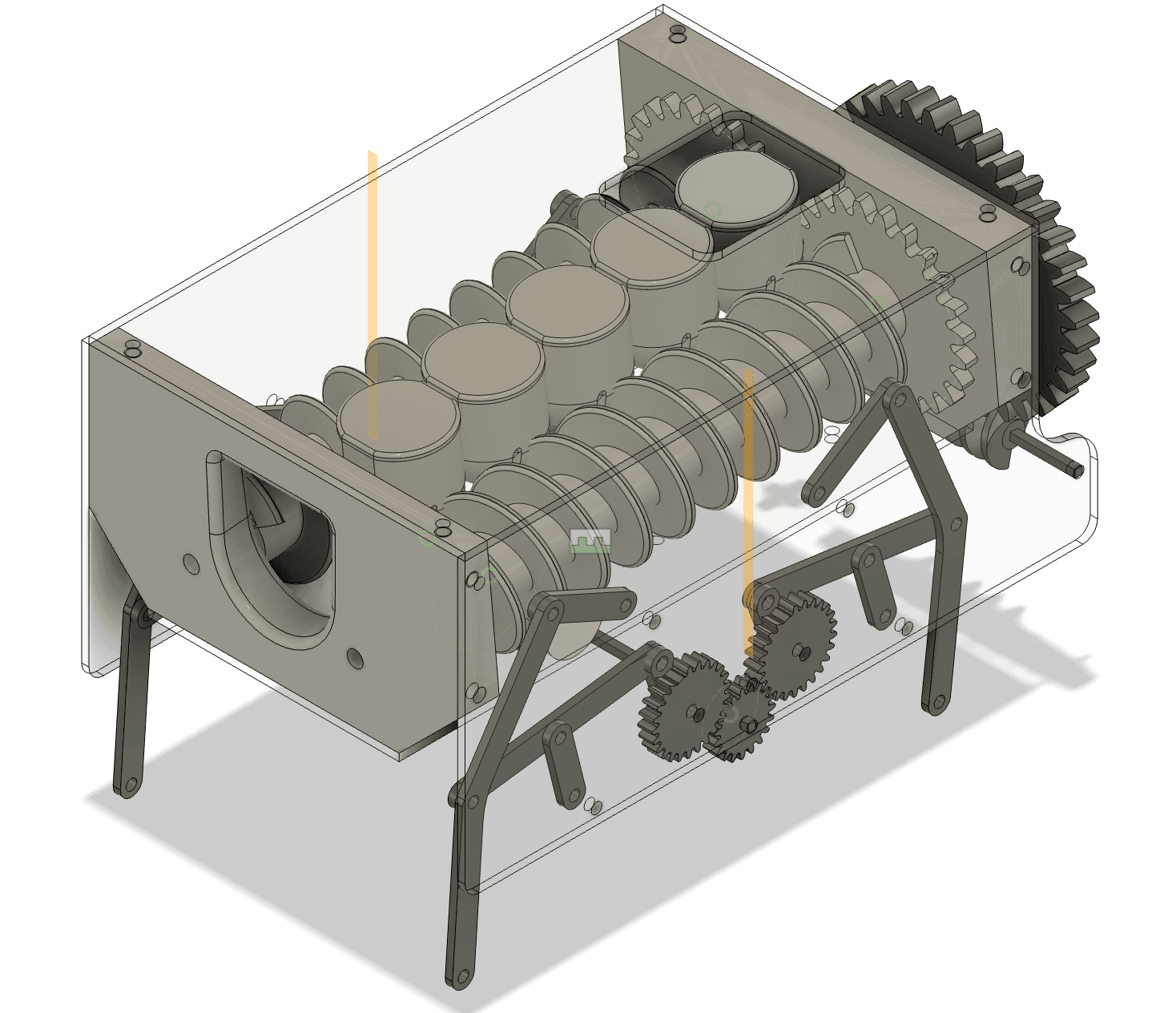
Integrated Architecture
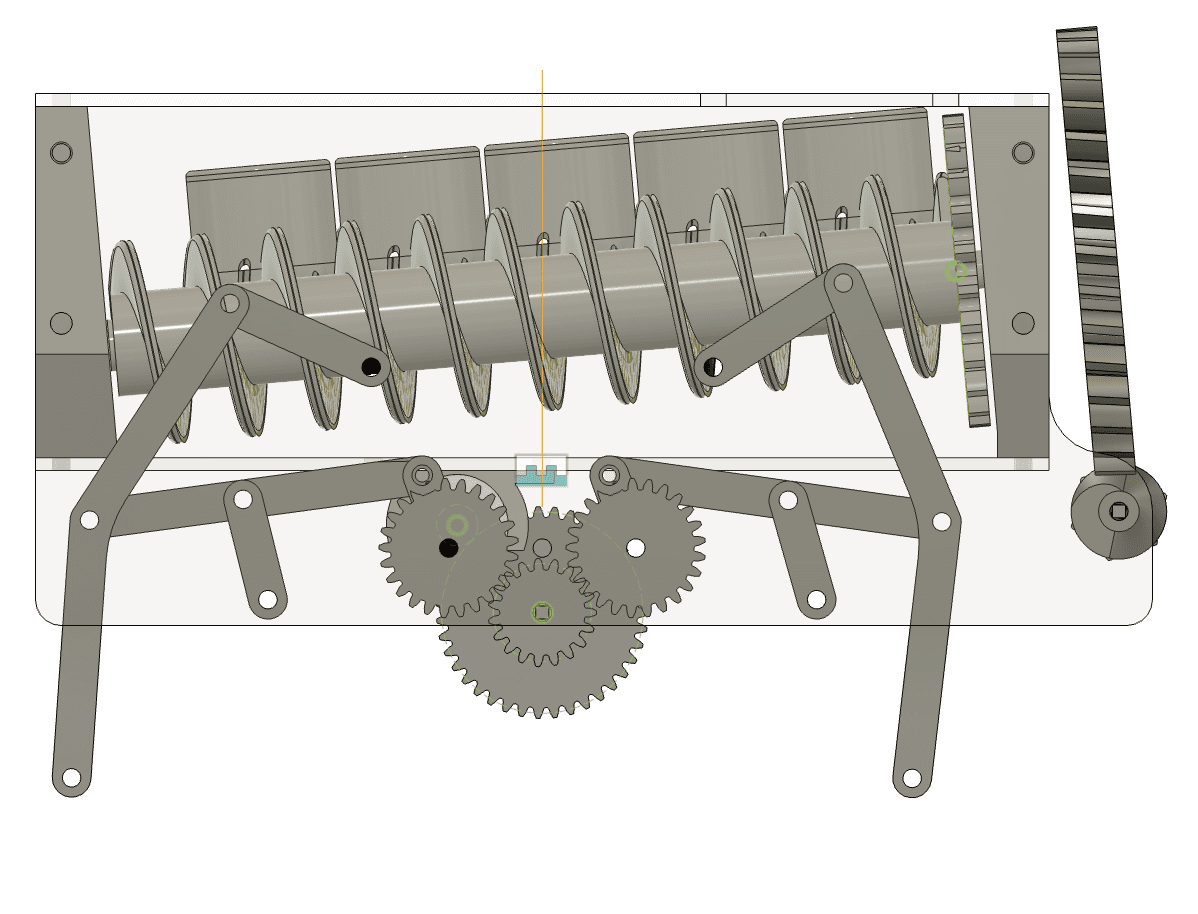
Motor power drives the legs on one side and crosses the chassis through a central shaft to the opposite pair. A sprocket on that shaft also transfers motion through a chain, worm, and helical gear to the dispenser, allowing the legs to cycle quickly while the augers advance payloads at a much slower, controlled rate.
Walking Mechanism
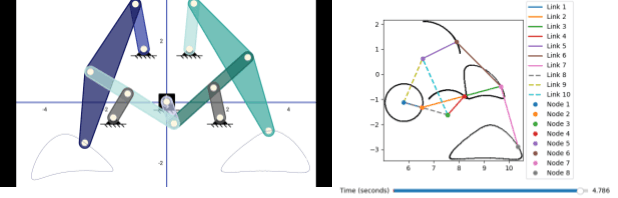
Two six-bar Klann legs were mounted on each side. The left and right sets were phased by half a central-gear rotation, so one side remained in contact with the ground while the other returned for its next step. Small center wheels were added to improve stability.
Position, velocity, and acceleration analysis estimated a walking speed of roughly 0.676 in/s and helped define the creeping gait before the physical assembly was finalized.
Dispensing Mechanism
Two screws rotate inward to move each protein-bar container toward the outlet. Standardized payload boxes include grooves that seat into the screw threads, keeping the bars aligned and reducing sliding, mixing, and jams as the robot walks.
The outlet and guide geometry allow one payload to clear before the next advances, while the gear reduction sets the release spacing from the robot's travel.
Detailed Design
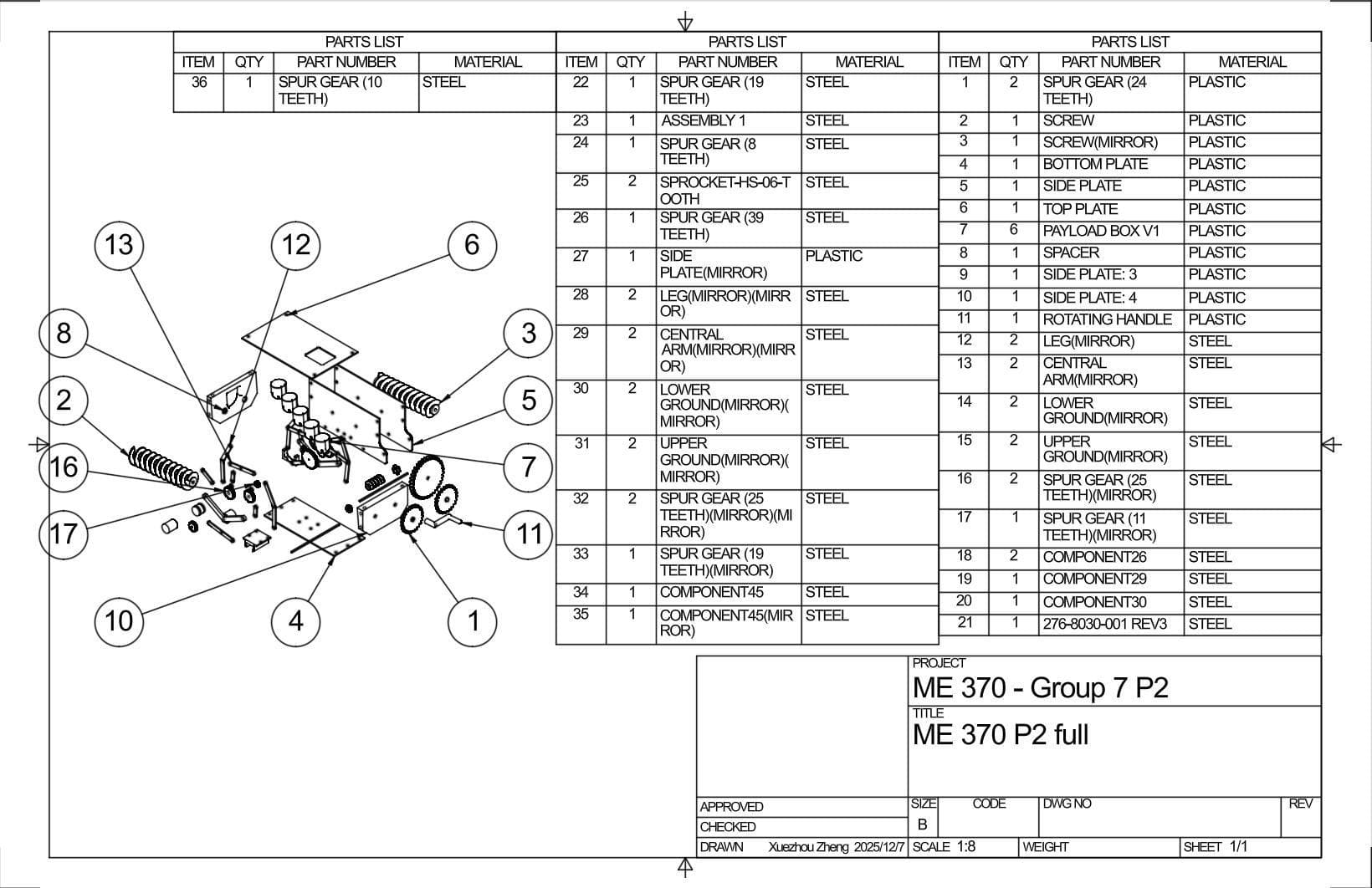
The final package combined transparent acrylic panels, printed augers, custom payload boxes, steel shafts, gears, sprockets, bearings, and linkage components. The exploded drawing documented the assembly and bill of materials before fabrication and final integration.
Final Performance
185 cm
The first payload dropped close to the two-meter target.
193-199 cm
Later payloads were released consistently near the intended interval.
>4 m/min
Average speed remained above the baseline requirement.
The dispenser performed consistently, while straight-line motion varied with gait phasing, surface friction, and wheel behavior. A future version would add more dimensional margin around the shoebox boundary and use repeated gait calibration to reduce directional drift.